Steering Committees

Steering Committee Meetings

MphaR Our Services Steering Committees

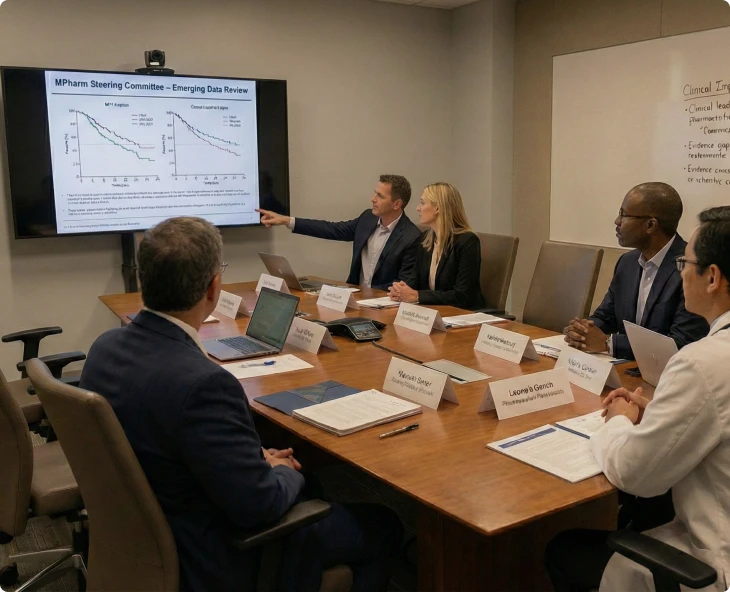
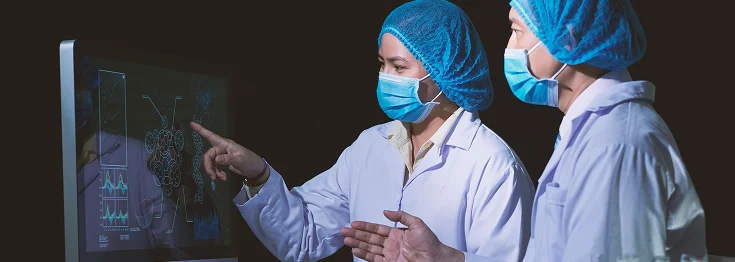
Steering Committees play an essential role in guiding scientific direction, shaping evidence-generation priorities, and ensuring that medical strategies remain aligned with real-world clinical needs. MphaR provides comprehensive support for the design, coordination, and execution of Steering Committee programs—before, during, and after major medical congresses.

Our structured, multi-meeting approach helps organizations continuously refine scientific plans, validate clinical data interpretations, and co-develop meaningful initiatives that improve patient care within a therapeutic area.

Objectives of a Steering Committee

Steering Committees bring together leading experts to:
  • Discuss and interpret emerging data presented at medical congresses
  • Review clinical implications and relevance across patient populations
  • Identify evidence gaps and strategic needs within the therapeutic landscape
  • Deep-dive into solutions to optimize patient care pathways
  • Provide expert guidance for white papers, publications, and evidence-generation plans
This trusted expert forum ensures that strategy decisions are informed by top scientific minds. 

How We Support Steering Committees

1. Preparation Stage

We manage all scientific and operational preparation, including:

  • Steering Committee member onboarding and briefing
  • Drafting and refining meeting materials (agendas, slides, questions)
  • Securing compliance approvals
  • Aligning objectives and expected outputs
This ensures every meeting is focused, efficient, and compliant.

2. Execution Stage

We deliver both live and asynchronous Steering Committee formats, supported by our digital tools

Asynchronous Discussions: Experts participate over several days or weeks—ideal for thoughtful, detailed input across global time zones.

Live Meeting: Moderated virtual or in-person sessions ensure direct dialogue, debate, and strategic decision-making.

Our scientific and technical team supports: 
  • Moderation and facilitation 
  • Real-time insight capture 
  • Polling, surveys, and interactive tools 
  • Document annotation and collaborative problem-solving 

3. Post-Event Stage

Following the meeting, MphaR transforms expert insights into clear, actionable outputs:
  • Key takeaways and strategic recommendations
  • Consolidated summaries or minutes
  • Final reports supporting internal decision-making and future planning
This ensures that insights are captured precisely and can be used effectively by Medical Affairs teams.

Built Around Key Congress Milestones

We structure Steering Committee activities around major global congresses (e.g., ASCO, ESMO, SABCS, ASH), ensuring regular expert input during periods of critical scientific updates.

A typical sequence may include:
Pre-Congress Meeting
Agenda-setting, reviewing anticipated data
Post-Congress Meeting
Interpreting new results and clinical impact
Follow - Up Meeting
Refining actions and next-phase planning  

This multi-touchpoint approach keeps strategy aligned with the evolving scientific landscape. 

Why Partner With MphaR?

What HCPs and Medical Affairs Experts Tell About Working with Us

We work closely with HCPs and Medical Affairs experts worldwide. Here’s what they share about partnering with MphaR
Trusted by Industry Leaders

Medical Affairs Trends: Blog, Digest and Podcasts

Stay informed on emerging Medical Affairs trends with expert blog articles, and twice-monthly editions of our Medical Affairs Digest and podcasts series.

TrendWatch: Medical Affairs

Explore concise articles covering the latest trends and innovations in Medical Affairs

Latest Article

Digital Preceptorships: Medical Affairs Takes Training Beyond the Hospital

The article explains how clinical training is shifting from traditional, hospital‑based preceptorships to hybrid and fully digital models that enable continuous, scalable expert learning. As digital platforms, virtual case discussions, and simulation technologies mature, preceptorships evolve from limited in‑person visits into ongoing, accessible educational ecosystems. By expanding beyond geographic and scheduling constraints, digital preceptorships allow clinicians to engage with expert faculty through structured virtual cases, remote mentorship, and interactive learning modules. This transforms what was once a one‑time observational experience into continuous knowledge exchange that supports real‑world clinical decision-making. Supported by Medical Affairs leadership, coordinated program design, and partnerships with clinical experts, digital preceptorships integrate consistent curricula, advanced analytics, and hybrid engagement pathways. These elements turn fragmented training opportunities into sustained professional development — positioning Medical Affairs as a key enabler of global clinical education and long-term competency building.

Augmented Intelligence, Not Artificial: How Medical Affairs and AI Work Together

The article explains how Medical Affairs is transitioning from manual data processing to an augmented intelligence model that blends AI-driven analytics with human scientific judgment. As automated literature review, trend detection, and digital insight platforms advance, MA evolves from reactive data handling into a continuous, high‑value scientific interpretation function. By allowing AI to synthesize large evidence volumes, surface emerging themes, and accelerate content preparation, augmented intelligence shifts MA effort from information gathering to contextual evaluation, strategic reasoning, and ethical decision-making. This partnership model enhances the ability to understand evolving scientific landscapes and respond to stakeholder needs with greater speed and depth. Supported by secure digital environments, structured expert engagement, and responsible AI oversight, augmented intelligence converts disparate data streams into sustained insight generation. As a result, Medical Affairs strengthens its role as a strategic scientific partner—guiding evidence planning, enabling more informed communication, and building long-term trust across the healthcare ecosystem.

Medical Affairs at Congresses: Turning Live Meetings into Continuous Scientific Exchange

The article explains how Medical Affairs is redefining congress participation from a concentrated, event-based activity into a continuous, multi-phase scientific exchange. As digital tools, hybrid formats, and data analytics mature, congresses evolve from isolated gatherings into catalysts for sustained engagement. By activating stakeholders before meetings, capturing structured real-time insights onsite, and extending dialogue through post-congress follow-up, Medical Affairs transforms fleeting interactions into enduring knowledge assets. Supported by AI-enabled synthesis, coordinated cross-functional alignment, and longitudinal impact measurement, congress strategy shifts from short-term presence to ongoing scientific partnership—positioning Medical Affairs as a driver of continuous insight generation and long-term stakeholder trust.

Bi-monthly Newsletter: Medical Affairs Digest

Your bi-monthly overview of essential Medical Affairs updates and emerging industry signals

Latest Newsletter
Bi-Monthly podcasts: Medical Affairs Voices

Listen to expert conversations exploring current trends and future directions in Medical Affairs

Precision Medicine in Oncology: Transforming Cancer Diagnostics Using AI Tools

In this episode, we uncover how artificial intelligence is transforming oncology, marking a shift from standardizedtreatments to precision medicine tailored to each patient’s genetic and molecular profile. From AI-powered imaging and digital pathology to genomic analysis and liquid biopsies, technology is reshaping how cancer is detected, understood, and treated. Hear how these innovations are driving earlier diagnoses, improving treatment accuracy, and empowering clinicians with insights once thought impossible. We also explore the ethical and practical challenges of integrating AI into cancercare and what it means for patients and providers alike. Join us as we look ahead to a future where AI doesn’t replace the human touch—it amplifies it, bringing us closer to truly personalized oncology care.

Leveraging AI and NLP to Transform Medical Information Systems in Medical Affairs

In this episode, we explore how artificial intelligence and natural language processing are reshaping how Medical Affairs teams manage, interpret, and apply vast volumes of unstructured medical information. From scientific literature and safety reports to advisory board insights and field intelligence, NLP is turning free text into structured, actionable knowledge—helping teams move faster while maintaining scientific rigor. Discover how NLP is being applied across literature intelligence, medical information systems, pharmacovigilance, and stakeholder engagement, and why human oversight remains essential in regulated medical environments. We also examine the risks, ethical considerations, and governance frameworks needed to ensure accuracy, transparency, and compliance. Join us as we look ahead to the evolution from language processing to true language understanding—and what this shift means for the future of Medical Affairs as a strategic, insight-driven function.

From Data to Dialogue — Strengthening Patient-Centricity Through Virtual Advisory Boards

In this episode, we examine how Virtual Advisory Boards are revolutionizing patient engagement, turning static data into meaningful dialogue that shapes real-world decisions. As patient-centricity becomes a defining principle in modern pharma, digital platforms are creating space for authentic collaboration between patients, caregivers, and industry leaders. Discover how virtual formats remove barriers to participation, ensure inclusivity, and make continuous patient input a practical reality. We’ll explore how the MphaR Virtual Advisory Board platform enables companies to integrate patient insights into trial design, treatment strategies, and beyond. Tune in as we explore how the future of patient engagement is being built—one conversation at a time—through innovation, empathy, and dialogue that truly puts patients at the center of healthcare.

Follow MphaR on Social Media:

MphaR Our Services Steering Committees

FAQs

Yes. We provide expert identification, profiling, and justification to ensure the committee includes the most relevant specialities.
Absolutely. We prepare agendas, discussion guides, and scientific materials, and we can also facilitate the sessions.
×

Thank you! Your message has been sent.

    Get Case Study

    Improving the treatment care of patients with Multiple Myeloma through regular digital connection between International, National Experts and haematologists in Europe

      Get Brochure